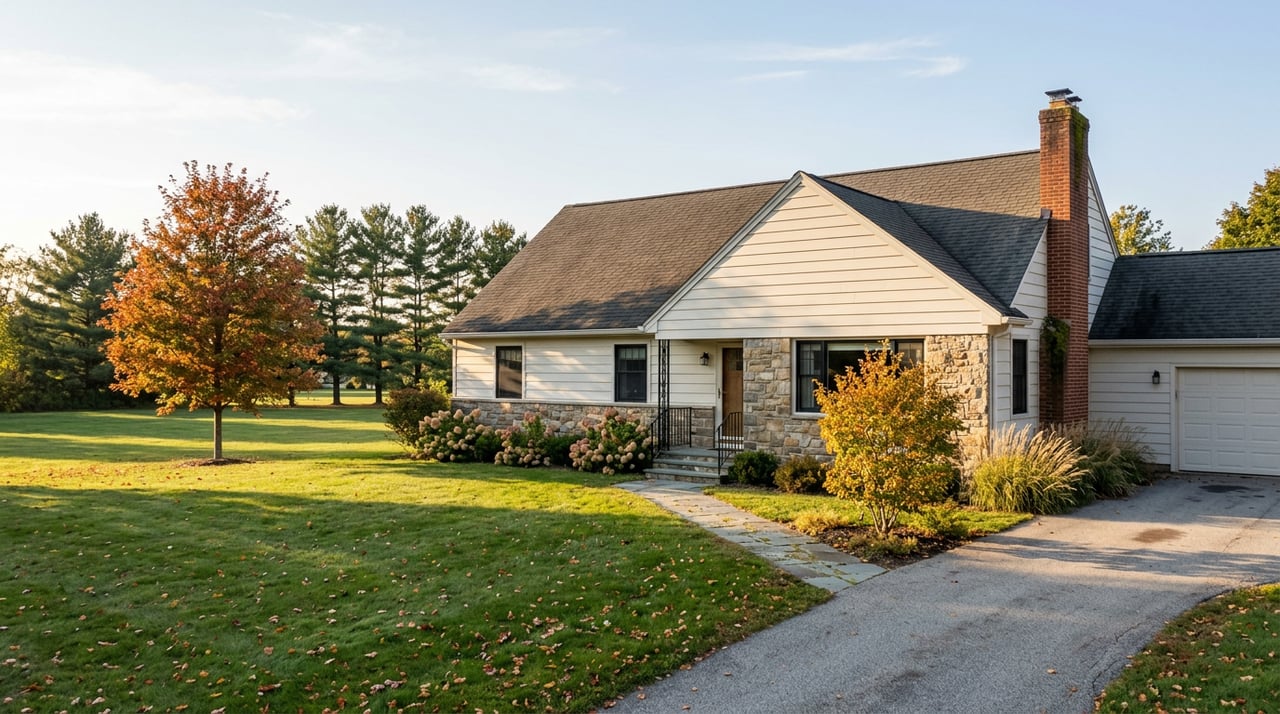
Wayne just posted its highest median sale price on record, at $844,500 for single-family homes in June 2026, up from $770,000 that March. In the 07470 zip code, homes sold in the three months ending that June drew roughly seven offers on average and closed in about 22 days. By any measure, that is a seller's market moving at seller's-market speed.
None of that speed protects a seller from the one thing that can stop a Wayne closing cold: a heating oil tank nobody remembered was still in the ground. The same fast timeline that makes multiple offers feel like a victory lap is exactly what turns a tank discovery into a real problem, because the seller has already told the buyer, the next mortgage lender, and often a moving company that this is closing in three weeks.
The 1950s left a fingerprint under a lot of Wayne's floor plans
Wayne's housing stock carries a specific origin story. William Paterson University's arrival transformed the area from farmland into an academic hub during the 1950s, and the residential building that followed gave the township its signature mix of split-levels, ranches, and midcentury Colonial styles alongside the older lakefront homes. Almost every one of those mid-century houses was built with oil heat, because that was the standard fuel source for new construction in that decade.
Over the following decades, many of those homes converted to natural gas. PSE&G's own instructions for oil-to-gas conversions tell homeowners to mark the location of any buried oil tank before utility crews start digging for the new gas line, a detail that only makes sense because so many converted homes still have one sitting in the yard. Converting the furnace was never the same project as removing the tank, and for a lot of Wayne homeowners, only the first half ever got done.
An underground oil tank does not show up on a survey or a listing photo. It shows up during attorney review, usually with a deadline already attached to it.
What a tank sweep actually finds, and what it costs
A tank sweep is a walk-the-property inspection using a magnetic locator or ground-penetrating radar to detect metal consistent with a buried tank, done alongside a visual check inside the home for old copper fuel lines near the furnace. It typically runs $100 to $300, and it is most often paid for by the buyer during the inspection or attorney-review window rather than ordered by the seller ahead of time. Wayne has enough of this business that at least one inspection firm, NJ Tank Check, maintains a page specifically for Wayne sweep requests, and Steve Rich Environmental Contractors, working in the area since 1981, says it has resolved more than 1,000 oil tank issues in Wayne alone.
If a tank turns up and there is no contamination, current 2026 pricing from New Jersey removal contractors generally runs $1,500 to $3,500 for a standard residential underground removal, covering permits, excavation, soil sampling, disposal, and backfill. If the sweep finds a leak, remediation costs start closer to $8,000 and climb from there depending on how much soil and groundwater are affected. New Jersey's Petroleum Underground Storage Tank Remediation, Upgrade and Closure Fund exists to help with those costs, though it currently carries a review backlog measured in years, not weeks, so it is not a realistic solution on a transaction timeline.
New Jersey's Seller's Property Condition Disclosure Statement asks directly about current and previously removed heating oil tanks, which means guessing or staying silent is not a legal option once a seller knows or suspects one exists. On the lending side, FHA explicitly requires an underground tank issue to be resolved before closing, and most conventional lenders will not fund a purchase with an undocumented tank still in the ground.
Two ways this plays out, and only one fits a 22-day close
In a slower market, a tank discovery mostly costs time. The seller absorbs a delay, maybe a price adjustment, and the deal usually survives because nobody else is waiting in line for the house.
Wayne is not in that market right now. When a home is drawing seven offers and closing in three weeks, the seller has typically already accepted a deal, told the backup offers no, and started planning around a specific closing date. That is precisely the moment a buyer's attorney-review sweep finds the tank, and the leverage flips. The buyer now has a documented reason to renegotiate price, demand a credit, or walk, and the seller has no other offers left to fall back on because everyone assumed the deal was done. The fast market that felt like an advantage becomes the reason there is no room to absorb a surprise.
What to do before the sign goes in the yard
- Check the home's heating history. Homes built before roughly 1980, which describes a large share of Wayne's split-levels and ranches, are the ones most likely to have started on oil heat, whether or not the home runs on gas today.
- Order a sweep before listing, not after an offer. A pre-listing sweep costs the same $100 to $300 whether a seller orders it in June or a buyer's attorney orders it in July, but only one of those timelines gives the seller room to fix a problem quietly.
- Track down old paperwork. Closure certificates, PSE&G conversion records, or a contractor's removal receipt from a prior owner can settle the question in an afternoon instead of during attorney review.
- Decide removal or credit on your own schedule. If a tank turns up, choosing between removing it before listing or offering a closing credit is a much easier conversation when there is no accepted contract and no countdown clock attached to it.
- Disclose fully either way. New Jersey's disclosure form asks the question directly, and a known tank that goes unmentioned creates liability that outlasts the closing.
A few questions Wayne sellers ask
Do I have to remove the tank if it isn't leaking? New Jersey does not have a blanket law requiring removal. In practice, most buyers and nearly every lender will require documentation, removal, or an escrow arrangement before they will close, which makes removal the path of least resistance for most sellers.
Who usually pays for removal in a Wayne sale? It is negotiable, but it most often falls to the seller, either by handling it before listing or by crediting the buyer at closing. Sellers who remove proactively tend to control both the price and the contractor, rather than negotiating against a number a buyer proposes mid-contract.
My home converted to gas years ago. Does this still apply? Possibly. Converting the furnace does not automatically mean the old tank was removed. If there is no closure paperwork on file, the tank's status is still unknown, and it is worth confirming before a buyer's attorney does it for you.
Wayne's market is rewarding sellers who show up prepared, not just sellers who show up first. If you are weighing a listing this fall and want a straight answer about what your home's age and heating history mean for a clean, on-schedule closing, The Only Orly Group can walk through it with you. Schedule a free consultation and we will help you get ahead of the one surprise that shouldn't be a surprise.