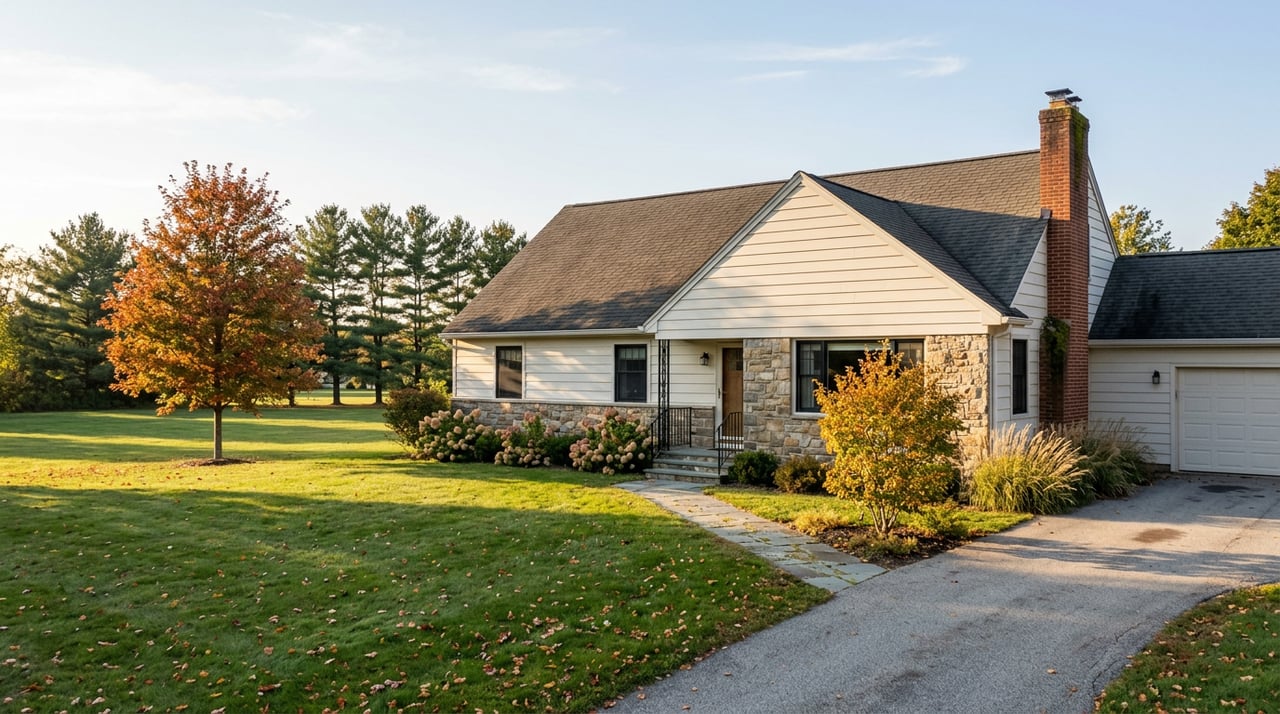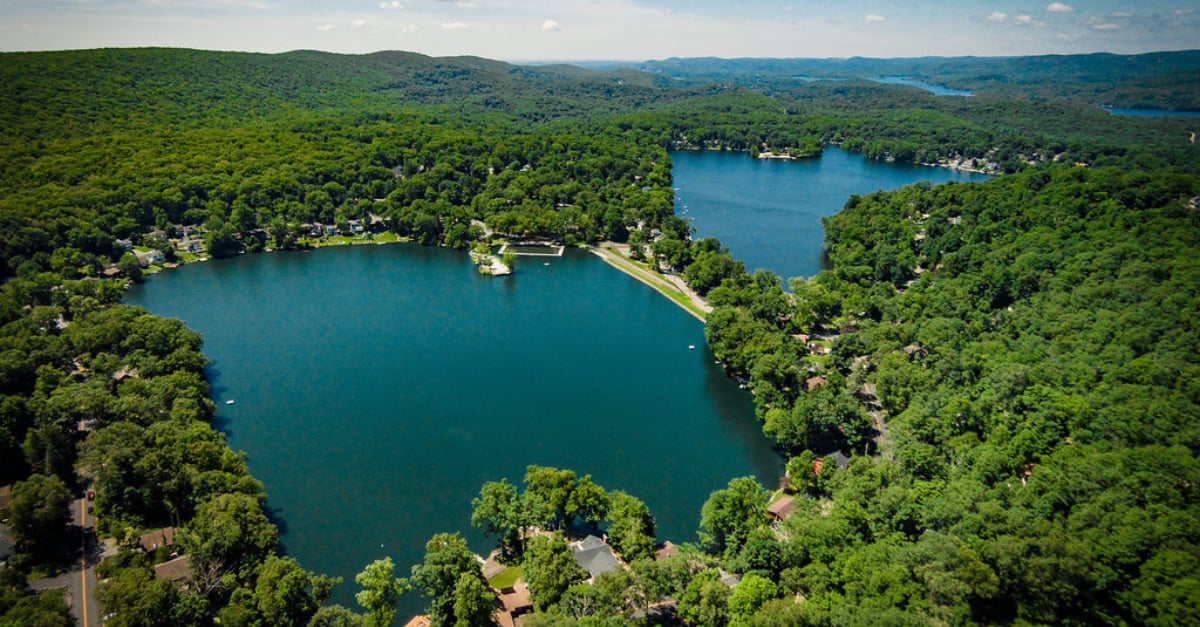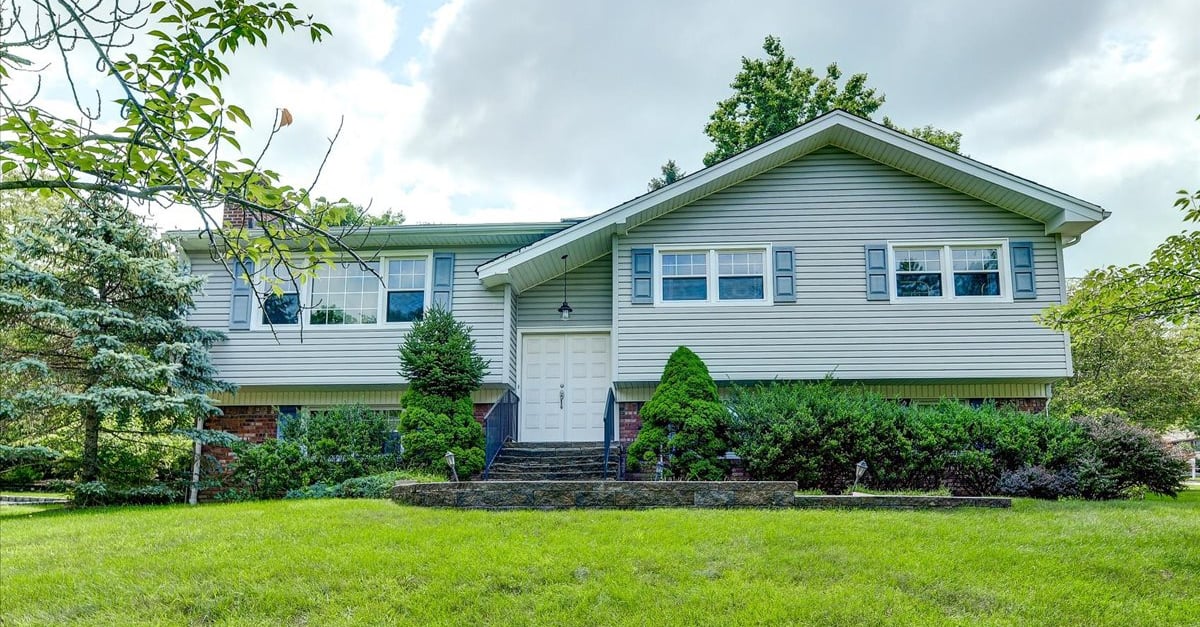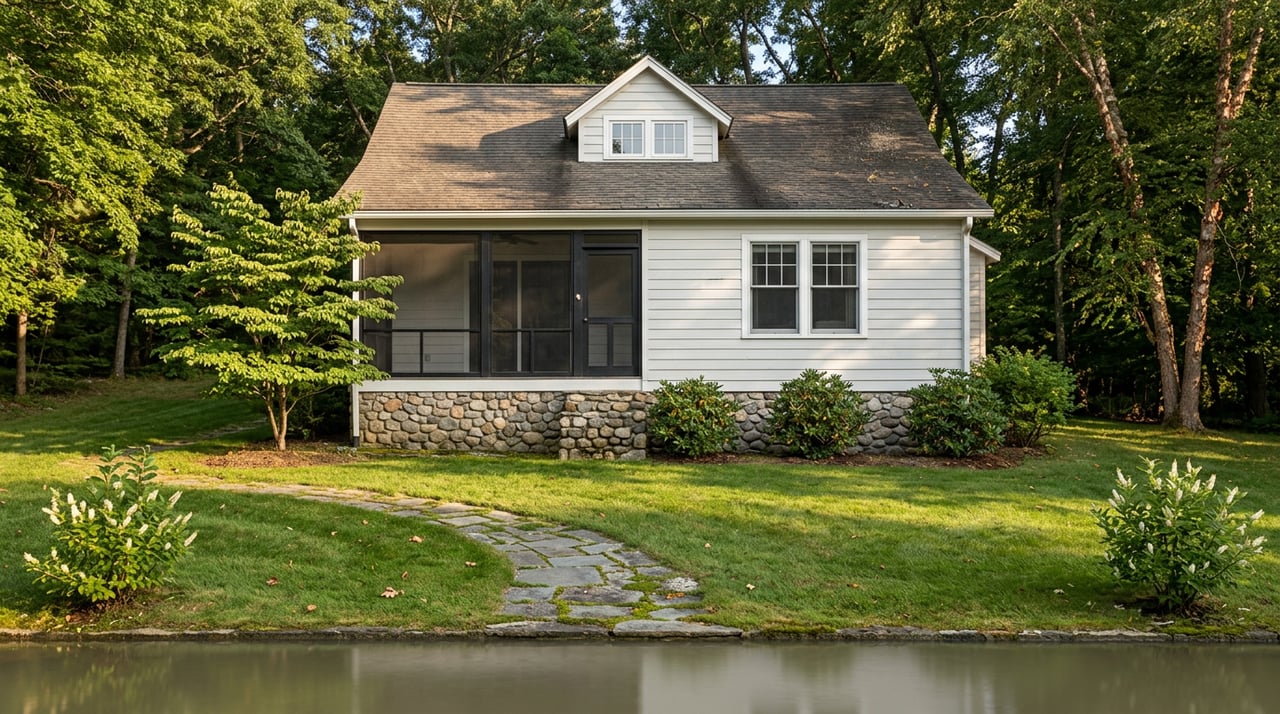
Picture the listing. Charming Cape on a quiet street, walking distance to the beach, "Cupsaw Lake community" right there in the headline. A buyer pictures summer evenings on a dock, a rowboat tied up somewhere nearby, maybe a swim club for the kids. Then, somewhere between the signed contract and the closing table, they learn the house is a hundred yards from a boundary line they never knew existed, and the lake they thought they were buying is not part of the deed at all.
That surprise is more common in Ringwood than most buyers expect, and it has almost nothing to do with the price of the house. It has to do with who actually owns the lake.
The lake was never part of the property
Ringwood's lake neighborhoods were not built the way most suburban subdivisions are, with a homeowners association layered on top of individually owned lots. They were built as private recreational communities from the start, and the lakes themselves were engineered and deeded to nonprofit associations, not to the towns and not to the individual homeowners who happen to live nearby.
The history explains the mechanism. In 1927, the Ringwood Company dammed the overflow at Tice's Pond and created what is now the roughly 90-acre Erskine Lake. Five years later the company built two more dams, forming the 65-acre lake at Cupsaw and the smaller 33-acre Upper Erskine Lake. In 1938 the Ringwood Company deeded all three lakes to the newly formed Erskine Lakes Property Owners Association, with the condition that the association maintain the beaches, clubhouses, and recreational facilities. Cupsaw split off on its own in 1945, forming what is now the Cupsaw Lake Improvement Association, and inherited the same arrangement: the lake belongs to the association, not to any single property owner.
Skyline Lakes tells a different but parallel story. That land was never part of the Ringwood Company's holdings. It was purchased in 1918 by a Japanese national named Heitaro Fujita, seized by the Alien Property Custodian during World War II, and later sold to a development group that built two dams between 1947 and 1949. After residents sued over unmet maintenance obligations, control eventually passed to a resident-run property owners association, following the same basic pattern as Erskine and Cupsaw: a private lake, governed by a private association, with its own rules about who gets to use it.
That is the part a listing photo never shows. The lake is not a shared municipal amenity like a town park. It is closer to a private club with a very specific membership map.
What "in the community" actually requires
Every one of these associations draws a boundary, and living inside the borough of Ringwood, or even on a street that sounds like it belongs to the lake, does not automatically put a house inside that boundary.
The Cupsaw Lake Improvement Association is explicit about this on its own membership page: eligibility depends on whether a specific address falls within the Cupsaw Lake boundary, and homeowners near the edge are told to check the association's membership map or email the membership committee directly to confirm. The Erskine Lakes Property Owners Association works the same way, with membership open only to homes in a defined area of Ringwood rather than to anyone who lives nearby.
That means two houses on the same road, half a mile apart, can carry two very different real values. One sits inside the line and comes with a lake membership that can be purchased. The other sits outside it and never will, no matter how the listing describes the neighborhood.
A house near the lake and a house with lake rights are two different products, and the deed alone does not tell you which one you are buying.
Membership has a price tag and a waiting line
Assuming a house does fall inside the boundary, membership itself is not free, and it is not guaranteed every year.
Cupsaw Lake's published fee schedule includes a one-time initiation fee of $500 for new members, on top of annual dues that run in the neighborhood of $359 to $384 depending on membership category, with an extra $30 for each additional access badge a household needs. Those figures come directly from the association's own current membership page, and buyers should always confirm the exact numbers for the year they are closing, since dues and initiation fees are set annually by the board and can change.
The more important detail for a buyer is the cap. Cupsaw membership each year is restricted to the maximum number of households the association's rules allow. Returning members get priority, and new applications are processed in the order they arrive. In a year when the association is at capacity, a house that qualifies for membership on paper can still land its new owner on a waiting list rather than a beach badge.
Erskine's association operates under similar logic through its bylaws, where dues obligations are treated as continuing liabilities of ownership and membership itself can be revoked by the board for nonpayment or conduct issues. None of this shows up on a property tax bill. It lives entirely inside the association's own governing documents, separate from anything the municipality of Ringwood tracks.
Lake Riconda operates as its own association as well, distinct from both Erskine and Cupsaw, which is a useful reminder that Ringwood does not have one lake system with one set of rules. It has several, each with its own boundary, its own dues structure, and its own board making decisions about capacity.
The timing problem this creates at closing
Here is where the lake question stops being a curiosity and becomes a real transaction risk.
New Jersey gives buyers and sellers a three-business-day attorney review period once a realtor-prepared contract is fully signed by both parties. During that window, either attorney can approve the contract as written, propose changes, or cancel the deal outright, and if neither attorney acts within the three days, the contract becomes binding exactly as signed. That window starts the business day after the last signature and does not count weekends or state holidays, which in practice often means a buyer has only a few working days to raise anything that matters before the contract locks in.
Confirming lake association eligibility, current dues status, and whether a membership can even transfer to a new owner is exactly the kind of detail that needs to surface inside that window, not after it closes. A buyer's attorney who does not know to ask the association directly, rather than relying on the listing description, can let the review period expire without ever getting a straight answer on whether the house comes with usable lake rights. Once that period passes, there is no built-in second chance to renegotiate based on what the buyer finds out later.
A short checklist before you write the offer
- Ask which specific association, if any, governs the lake near the property, since Erskine, Cupsaw, Skyline, and Riconda each run independently.
- Request the association's boundary map for that property's exact address before assuming eligibility.
- Get written confirmation of whether membership is at capacity for the current year, and whether a waiting list applies.
- Ask the seller for the current dues balance and any outstanding violations, since unpaid dues are typically treated as a continuing obligation.
- Confirm in writing whether the membership itself transfers with the sale or requires a new application and a new initiation fee.
- Have your attorney raise all of this during the three-day review period, in writing, rather than treating it as a closing-day formality.
A few questions worth asking directly
Does living inside Ringwood automatically qualify a home for lake access? No. Each lake association draws its own boundary map, and a property has to fall inside that specific line, not just within the borough, to be eligible for membership.
Is the lake itself owned by the town? No. Ringwood's major lakes were deeded to private nonprofit associations decades ago, and those associations, not the municipality, set the rules for membership, dues, and capacity.
Can a new buyer be denied membership even if the house qualifies? Yes, if the association has already reached its cap for that year. Returning households are typically given priority, and new applicants are processed in the order received.
Buying into a lake neighborhood in Ringwood can absolutely deliver everything the listing photo promises, a beach, a clubhouse, a summer swim team, a place the whole family actually uses. It just requires confirming that promise in writing before the attorney review clock runs out, not after the moving truck arrives.
If you are weighing a house near Erskine, Cupsaw, Skyline, or Riconda, or preparing to sell one, The Only Orly Group can help confirm exactly what comes with the deed and what still requires an application. Schedule a free consultation before you write the offer, not after.